ServicesMaintenance Plans
HVAC Maintenance Plans in Newman Lake
With a maintenance plan, your furnace, air conditioner or heat pump gets tuned up on a regular schedule, so wear shows up on a quiet weekday rather than a cold night. We tell you what each visit checks, what we found and what it means for your equipment.
What you get with a maintenance plan
A plan is an ongoing arrangement. We come out on a set schedule, tune up your heating and cooling equipment and track how it ages season to season. Plans start at $14.99 a month, which covers your seasonal tune-ups, a member discount on any repairs and priority when our schedule fills up.
Equipment rarely breaks all at once. A capacitor gets weaker, a flame sensor builds up residue, a condensate line slowly plugs. Caught early, each is a small fix; left alone, each can shut the system down in a January cold snap.
We write it all down in plain language. If a part is fine, we tell you. If it is wearing, we give you a rough idea of how long it has left and let you choose when to handle it.
What each tune-up includes
Furnace safety check
We inspect the heat exchanger for cracks, test the flame sensor and igniter, and check gas pressure and venting. A cracked heat exchanger can leak carbon monoxide, so this is the part of the visit we never rush.
Cooling and heat pump check
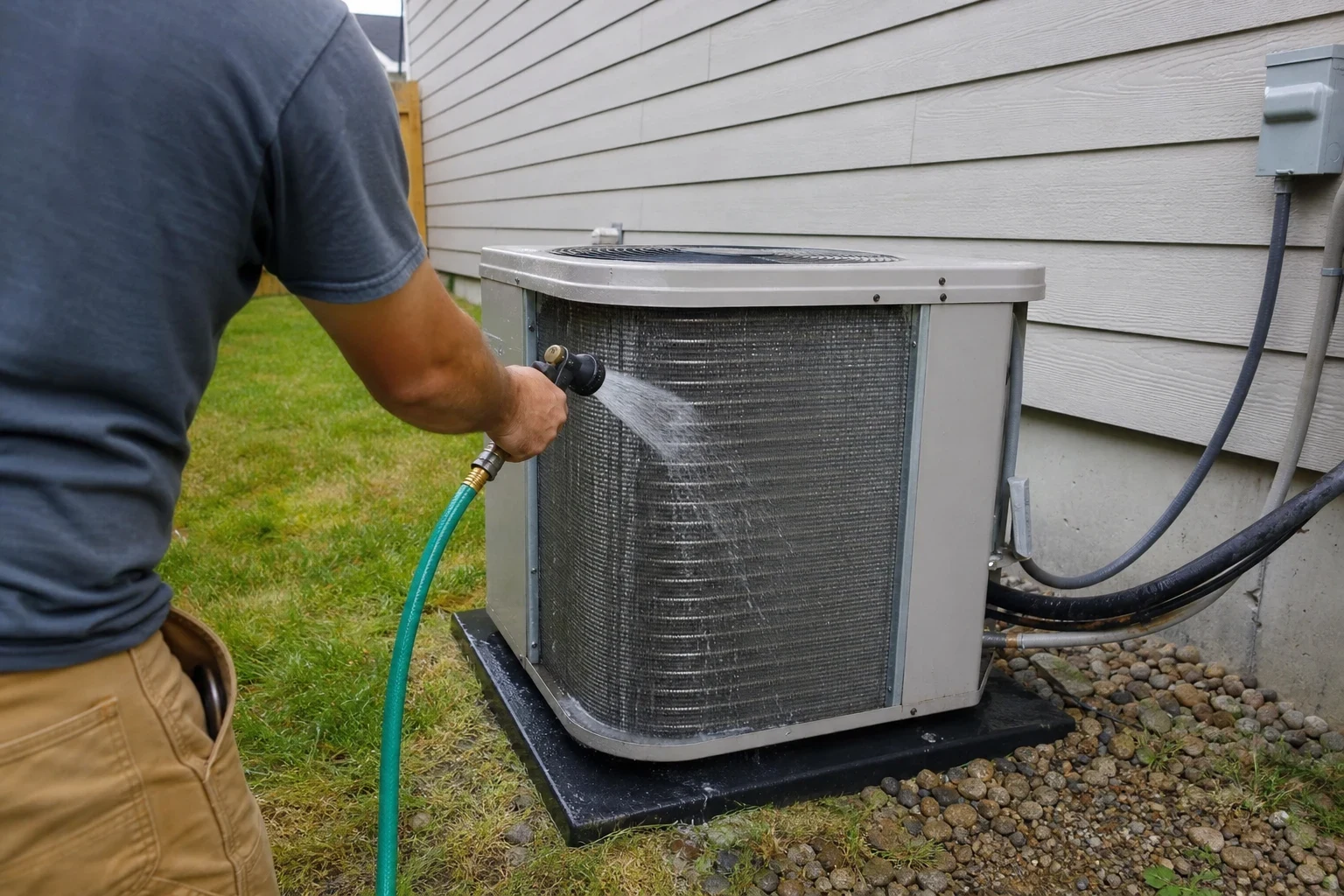
We measure refrigerant temperatures, test the capacitor and contactor, and clean the outdoor coil so the unit can shed heat. On heat pumps we also run the defrost cycle and confirm the reversing valve switches cleanly.
Electrical connections and controls
Loose terminals and pitted contacts cause a large share of no-start calls. We tighten connections, check amp draw on motors and make sure the thermostat reads and switches correctly.
Filter and blower
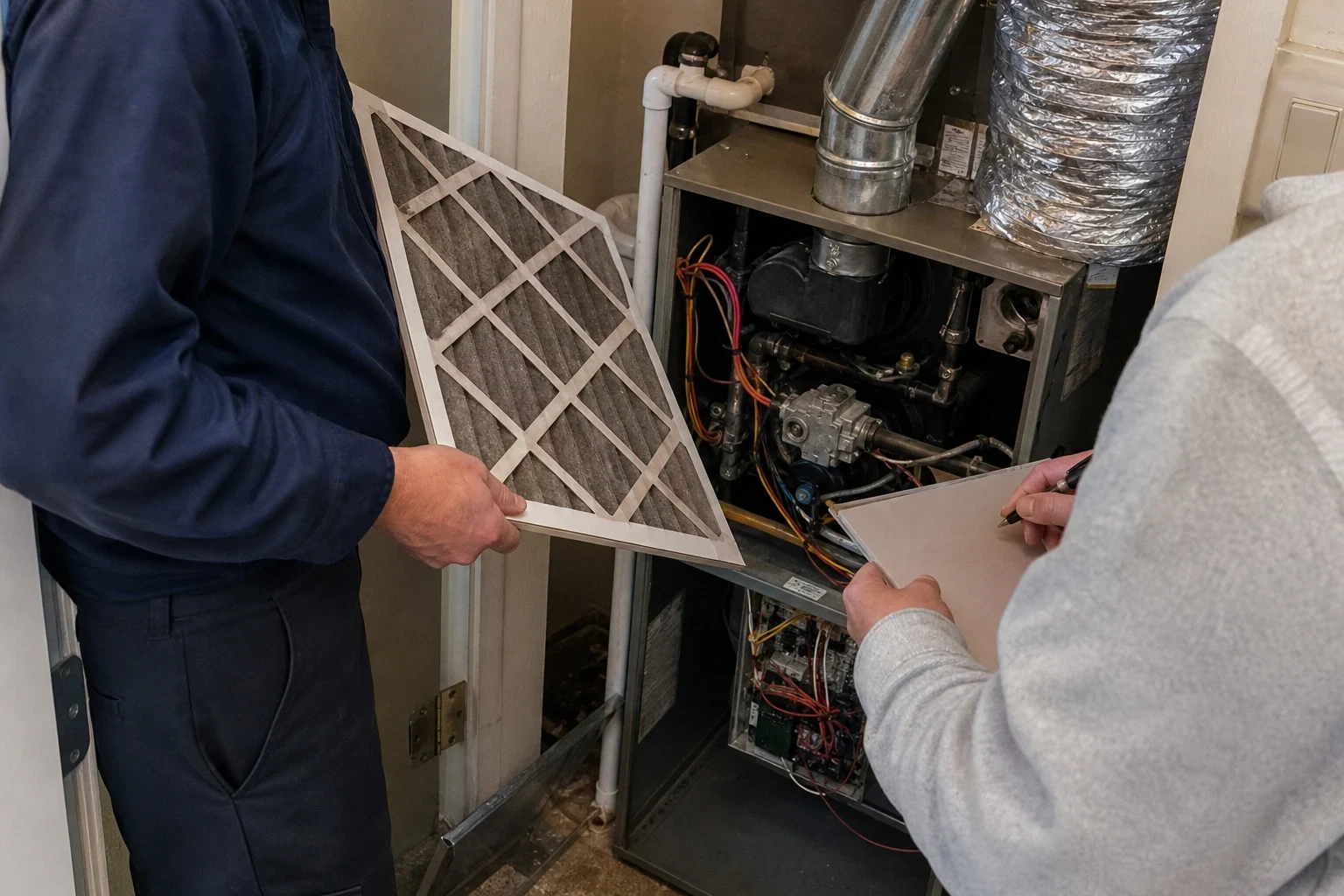
We check the filter fit, clean the blower wheel where needed and take a static pressure reading at the equipment. A dirty blower makes the system run longer for the same comfort.
Condensate drains
High-efficiency furnaces and air conditioners make water. We flush the drain line and check the trap and any pump so water stays out of your home.
A short written summary
You get notes on what we checked, what we measured and anything worth watching. There is no pressure to act on the spot.
When a plan makes sense for your system
- No tune-up in a year or two
- If you can't recall the last service, dust, worn parts and weak capacitors have had time to pile up. A first tune-up gives us a fresh starting point.
- Rising energy bills
- Dirty coils and a clogged filter make equipment run longer to hit the same temperature. Higher bills with no change in habits often trace back to this.
- Short cycling or uneven rooms
- A system that turns on and off every few minutes, or leaves some rooms warmer than others, usually points to an airflow, control or refrigerant issue.
- Odd smells or sounds at startup
- A dusty smell on the first cold day is normal. Burning, rattling, squealing or a delayed boom at ignition is not, and should be checked before peak season.
- Equipment older than ten years
- Older systems benefit most from regular care. Tracking wear at each visit also lets you plan a replacement on your own timeline, not after a breakdown.
What happens on a plan visit
- 1
Booked before the season
Heating tune-ups are done in early fall and cooling tune-ups in spring, ahead of the rush. When schedules fill, plan members get priority.
- 2
Arrival and a short talk
We lay down floor protection, ask what you've noticed since our last visit and look the equipment over before we start.
- 3
Tune-up and tests
We go through the checklist for each system, clean what needs it and record readings so next time we have something to compare against.
- 4
Review and next steps
We show you what we found, with photos when they help. If a repair is worth doing, you get a written quote before any work starts, and the choice is yours.
What sets the price of a plan
A plan's price mostly depends on how much equipment we look after and how often we come. We talk through the options by phone, explain what each covers and give you a free quote before you join.
- How many systems
- One furnace paired with an air conditioner counts as one setup. A second system, or mini-split heads in an addition, adds time to every visit.
- Kind of equipment
- Heat pumps run for heating and cooling all year, so they get a full check each season. Gas furnaces add combustion and venting tests.
- Age and condition
- The first visit on neglected equipment may run longer. Repairs we find are quoted on their own, so the plan price stays steady.
- Access
- Equipment in a tight attic or crawlspace takes longer to reach and service safely than a basement furnace or a condenser in an open side yard.
Questions about maintenance plans
- Is a tune-up worthwhile if nothing seems wrong?
- Usually. Much of what we find, like a weakening capacitor or a dirty flame sensor, shows no sign until the day it fails. Tune-ups also keep efficiency nearer to where it was when the system was new.
- How often do you come out?
- Most homes get two visits a year, one before heating season and one before cooling season. A home with only a furnace may need just a fall visit, and we'll tell you plainly which suits your equipment.
- Are repairs covered by the plan?
- Plans come with repair discounts, not free repairs. If something needs fixing, you get a written quote before work starts, and any diagnostic fee is credited toward the repair.
- What if something fails between visits?
- Emergency HVAC repair is available around the clock, every day of the year. Night and weekend breakdowns cost nothing extra, since we charge no emergency or after-hours fees. Plan members also get moved up the schedule, which helps most during the first hard freeze or a summer heat wave.
- Will you service equipment another company put in?
- Usually, yes. We work on common brands of furnaces, air conditioners, heat pumps and mini-splits, and we note anything about the original install that affects how the system runs.
Put your heating and cooling on a schedule
Tell us what equipment you have and when it was last serviced. We will explain the plan options in plain terms and give you a free quote over the phone.