ServicesFurnace Repair
Furnace Repair in Newman Lake
If your furnace quits heating, short-cycles or makes a new noise, we track down the cause, show you the part that failed and lay out your choices in plain words. No repair begins until you approve a written quote, and the diagnostic fee is taken off the repair bill.
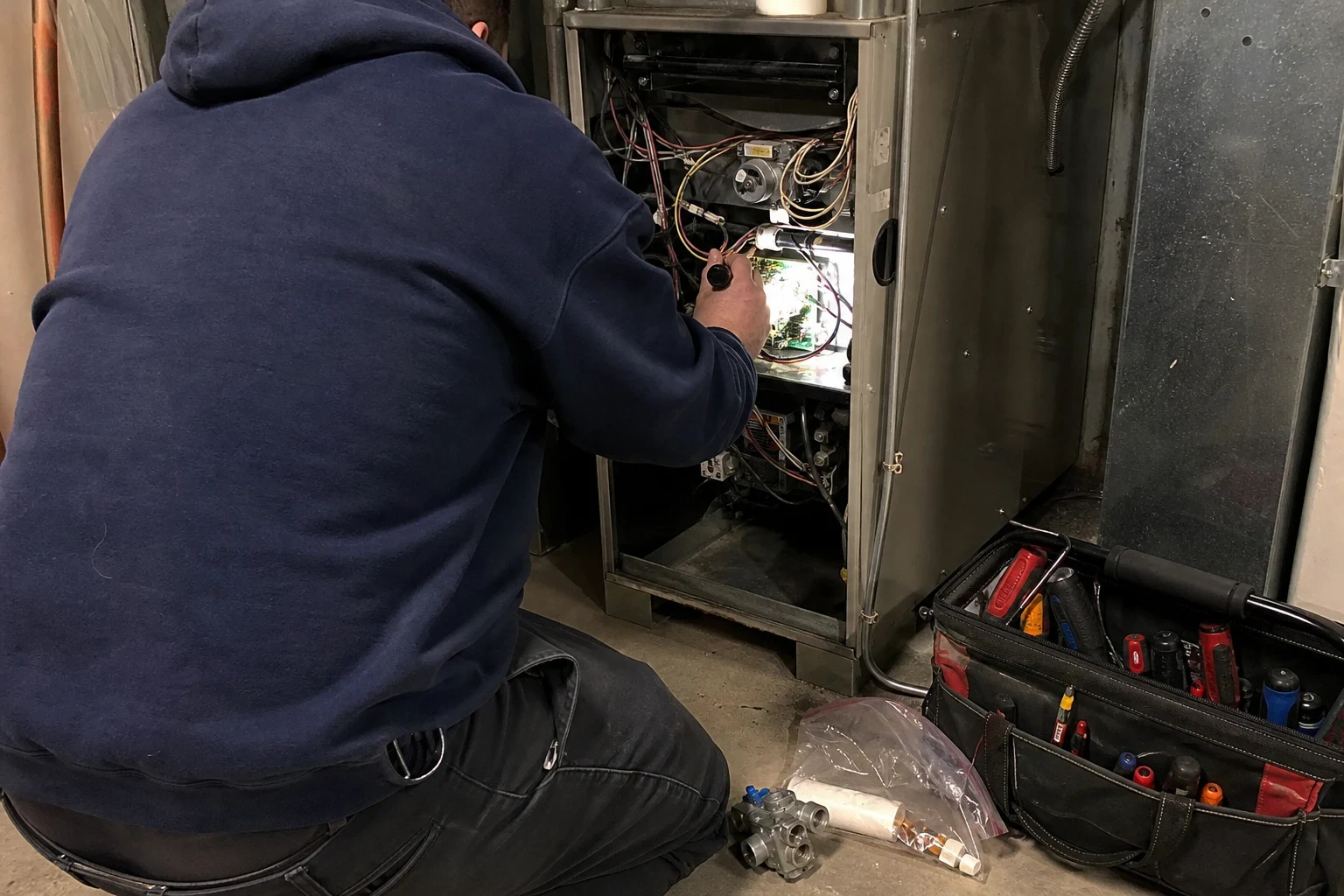
What goes into a furnace repair
Most furnace breakdowns trace to a few parts: the igniter, flame sensor, inducer motor, pressure switch, blower motor and its capacitor, or the control board. A careful repair tests each step of the heating sequence in turn, so we replace the part that actually failed rather than guessing.
We repair gas and propane furnaces and explain what we find as we go. If a part is worn but still doing its job, we say so, and you choose whether to replace it now or watch it. When a furnace is close to the end of its life, we tell you plainly and explain what repair and furnace installation would each mean for your home.
Our winters are long and cold, and a furnace that struggles through November may stop on the first hard freeze. Finding a weak part early is usually the cheaper, calmer route.
What every furnace repair visit includes
A full heating-sequence test
We watch the furnace go from a call for heat through ignition and blower start. Along the way we check the thermostat signal, inducer, pressure switch, igniter and flame sensor.
Combustion safety checks
We inspect the burners and flue connection, look over the heat exchanger for cracks or rust, and check for carbon monoxide around the appliance. If anything is unsafe, you hear about it first.
Electrical and blower testing
Weak capacitors, loose wiring and worn blower bearings cause a large share of no-heat calls. We test them with a meter, not by eye.
Filter and airflow check
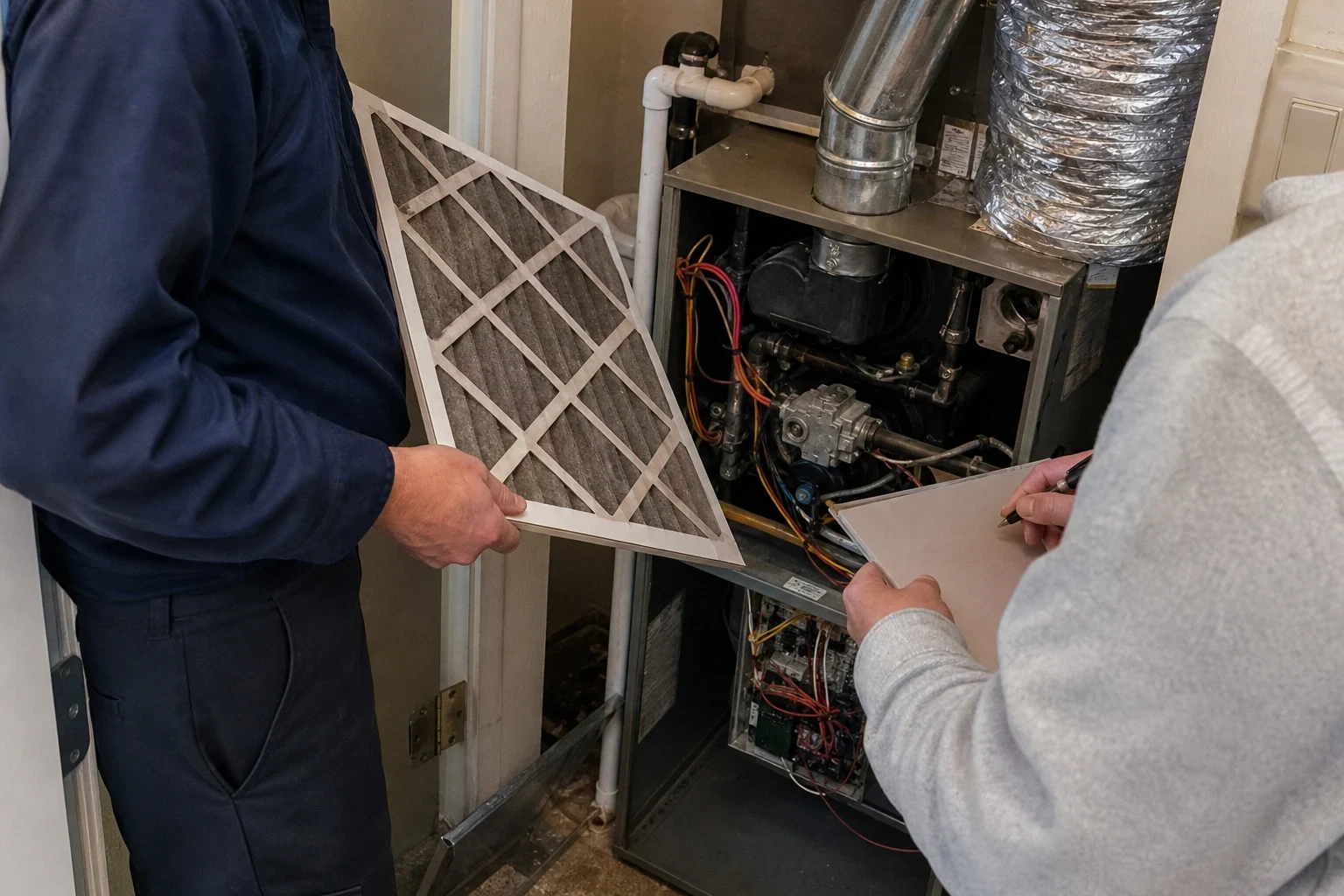
A clogged filter can overheat the heat exchanger and trip the high-limit switch, which shuts the burners off. We check it as part of every visit.
Care for your home and a final run
We protect the floor around the furnace, clean up when we finish and run the system through a full heating cycle with you before we leave.
Signs your furnace needs a repair
- Cool air from the vents
- If the blower runs but the air feels cool, the burners may not be lighting or staying lit. A dirty flame sensor is a common and modest fix.
- Short cycling
- A furnace that fires, runs a minute and shuts off is often overheating or losing its flame signal. Left alone, it wears out the igniter and controls faster.
- New noises
- Squealing usually points to the blower motor. A bang at startup can mean delayed ignition, which deserves a prompt look.
- Yellow flame or soot
- Burner flames should be mostly blue. A lazy yellow flame or soot near the burners suggests poor combustion, so turn the furnace off and call us.
- Gas bills climbing
- If your bills rise without a change in weather or thermostat settings, the furnace may be running longer to make up for a failing part.
- A blinking status light
- Most modern furnaces flash an error code through a small window on the panel. Note the pattern before you call; it helps us arrive with the right part.
How a furnace repair visit runs
- 1
You call and describe the problem
Describe what the furnace is doing and read us the code on the status light if there is one. Our phone is answered around the clock, and a night or weekend call carries no extra charge.
- 2
Diagnosis at the furnace
We test the system step by step and show you the failed part, often with a photo or a meter reading so you can see what we see.
- 3
Your written quote
You get the repair options in writing, with a plain explanation of each. Nothing starts until you approve it.
- 4
The repair and a test run
We make the repair, recheck combustion and the safety controls, then run a full heating cycle and clean up the work area.
What sets the price of a furnace repair
Cost depends on which part failed and how hard it is to get to. Cleaning a flame sensor is a very different job from replacing a control board, so we diagnose before we quote. The diagnostic fee goes toward the repair, so you don't pay twice to learn the answer.
- Which part failed
- Igniters and sensors are small parts. Inducer motors, blower motors and control boards cost more and take longer to put in.
- Make and age of the furnace
- Common parts are easy to get. Older or less common models may need a specific part ordered, which can add time.
- Getting to the furnace
- Working on a furnace in an open basement goes faster than on one squeezed into a tight crawlspace or attic.
- Other wear we find
- One failure sometimes uncovers another, such as a weak capacitor next to a dead motor. We list these on their own lines so you can decide.
- Repairing versus replacing
- When a cracked heat exchanger or repeated major failures make repair a poor value, we explain why and what furnace installation would involve, with no pressure.
Furnace repair questions
- Should I repair or replace my furnace?
- It depends on the furnace's age, the part that failed and how often it has needed work. A furnace near the end of its expected life that needs a major part is often a better candidate for replacement. We give you both options in writing, explain the trade-offs and let you decide. Estimates are free on installations and replacements.
- Is it safe to keep running a furnace that's acting up?
- Short cycling or cool air is usually a comfort problem, not a safety one. A gas smell, a yellow flame, soot or a carbon monoxide alarm is different. Turn the furnace off, leave the house if you smell gas, call your gas utility and then call us.
- Is there anything I can rule out on my own first?
- A few quick looks can save you a visit. Confirm the thermostat is in heating mode with live batteries, and check the breaker panel for a tripped switch. Near the furnace there is usually a service switch that looks like an ordinary light switch; make sure nobody has flipped it off. Slide the filter out as well, and if it is gray and packed with dust, swap in a clean one. If the furnace still won't heat, write down the pattern of the blinking light and give us a ring.
- Do you charge more at night or on weekends?
- No. We add nothing for emergency or after-hours visits. A furnace that gives out in the middle of a January night is diagnosed at the same rate as one that fails on a Tuesday afternoon.
- Can a maintenance plan prevent breakdowns?
- A yearly tune-up catches many of the parts that fail in winter, such as dirty flame sensors and weak capacitors. Our maintenance plans include tune-ups, repair discounts and priority scheduling. You can read the details on the Maintenance Plans page.
Ready for a warm house again
Describe the symptoms over the phone and we will share what we suspect, how the visit would go and what happens after that.