ServicesCommercial HVAC
Commercial HVAC in Newman Lake
We repair, replace and maintain heating and cooling equipment for small businesses: rooftop units, unit heaters, furnaces and split systems. You get a clear explanation of what is wrong, what your options cost to run, and a written quote before any work begins.
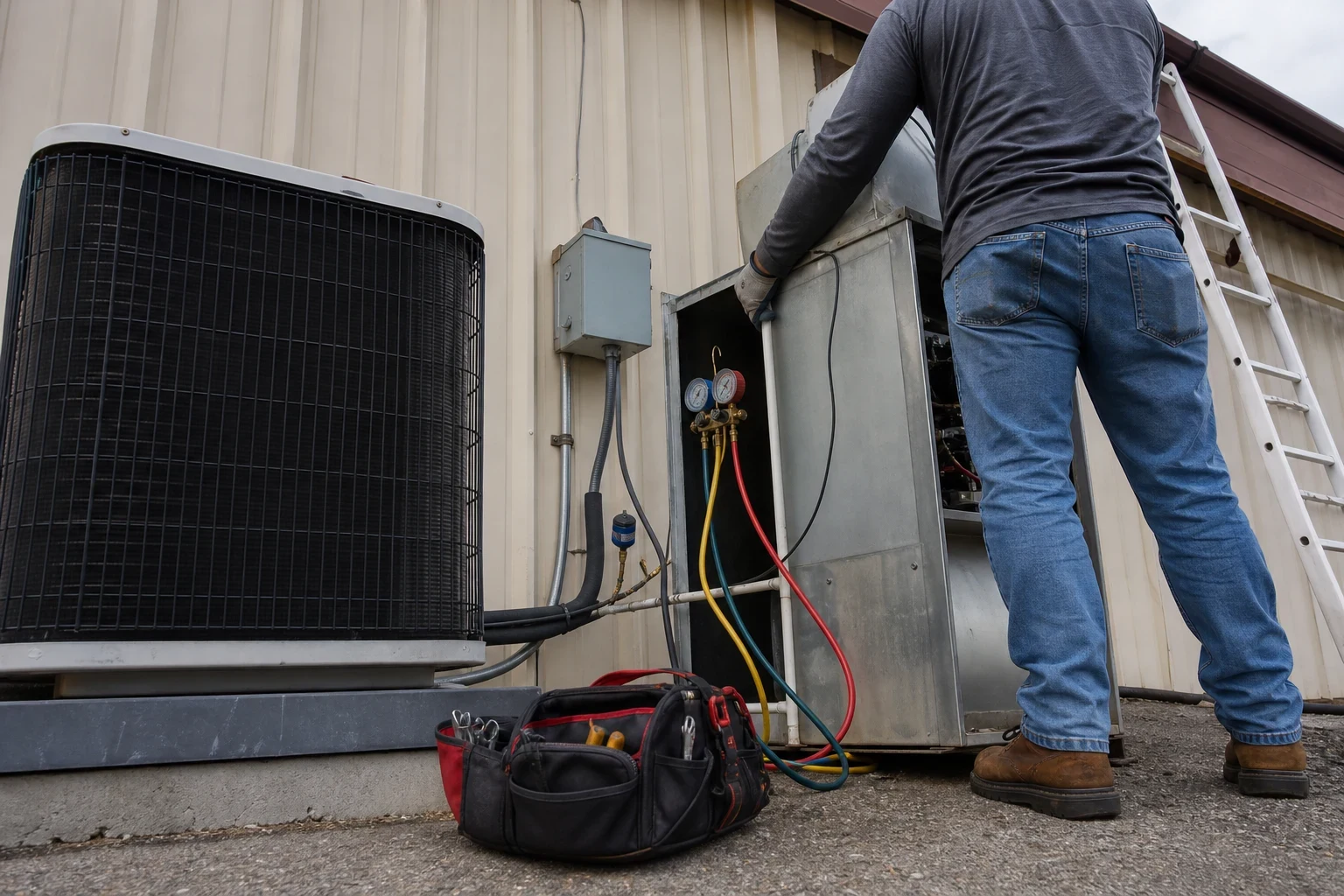
Heating and Cooling for the Place You Work
A small office, a retail space or a shop with a roll-up door asks more of its equipment than a house does. Doors open all day, people and machines add heat, and the system often runs on a schedule nobody has looked at in years. When it struggles, customers notice and staff get uncomfortable long before anything fully breaks.
We work on the equipment small commercial buildings actually use: packaged rooftop units, gas-fired unit heaters hung from the ceiling, standard furnaces with outdoor condensers, and ductless mini-splits for offices or server closets. We do not take on ductwork, so if a problem traces back to the ducts themselves, we will tell you plainly and leave that part to a duct specialist.
Our approach is the same one we use everywhere: show you what we found, explain what each choice means for comfort and running cost, and let you decide.
What Our Commercial Work Covers
- Rooftop unit service
- We check burners, heat exchangers, compressors, belts, economizers and condensate drains on packaged rooftop units. Roof access is planned ahead so the work is safe and does not disturb your business below.
- Unit heater repair
- Hanging gas heaters in shops and garages fail at the igniter, the flame sensor, the gas valve or the fan motor. We test each one and replace only the part that has actually failed.
- Equipment replacement
- When a unit is near the end of its life, we size the replacement to the space and how it is used, not just to the label on the old one. Estimates are free on installations and replacements.
- Thermostats and scheduling
- A programmable or networked thermostat set to your real hours can cut wasted runtime overnight and on weekends. We set it up and show whoever opens the building how to use it.
- Ductless systems for problem rooms
- An office that is always too warm or a back room with no heat can often be fixed with a single ductless head rather than reworking the main system.
Signs Your Building's System Needs Attention
Uneven temperatures
The front counter is cold while the back office is stuffy. This often points to a struggling unit, a failed damper or a thermostat in the wrong spot.
Energy bills creeping up
If usage climbs with no change in hours, equipment is usually running longer to do the same work. Dirty coils and worn parts are common causes.
Short, frequent cycles
A system that starts and stops every few minutes wears out quickly and never fully conditions the space.
Smells or noises from the roof
Squealing belts, rattling panels or a burning odor at startup are worth a look before they turn into a shutdown on a busy day.
No recent service record
If nobody can remember the last tune-up, the unit is likely overdue. Commercial equipment runs more hours and needs checking more often than residential gear.
What Shapes the Cost of Commercial Work
Commercial jobs vary more than residential ones, because the buildings and equipment vary so much. We would rather explain the factors than guess at a number before we have seen the unit. Your written quote shows each part of the price.
Type and size of equipment
A small split system and a large rooftop unit are very different jobs. Tonnage, fuel type and how many units serve the building all matter.
Access
Rooftop units may need a ladder setup or a lift, and unit heaters mounted high in a shop take more time to reach safely.
Parts availability
Common parts are quick and affordable. Older or specialty equipment can need parts ordered from the manufacturer, which affects both price and timing.
Timing and hours
Working before opening or after closing can be arranged. We charge no emergency or after-hours fees, so a night call costs the same as a daytime one.
How a Commercial Visit Works
- 1
A conversation by phone
You tell us what is happening, what equipment you have if you know, and when the building is open. We schedule around your hours so the visit causes as little disruption as possible.
- 2
Inspection and diagnosis
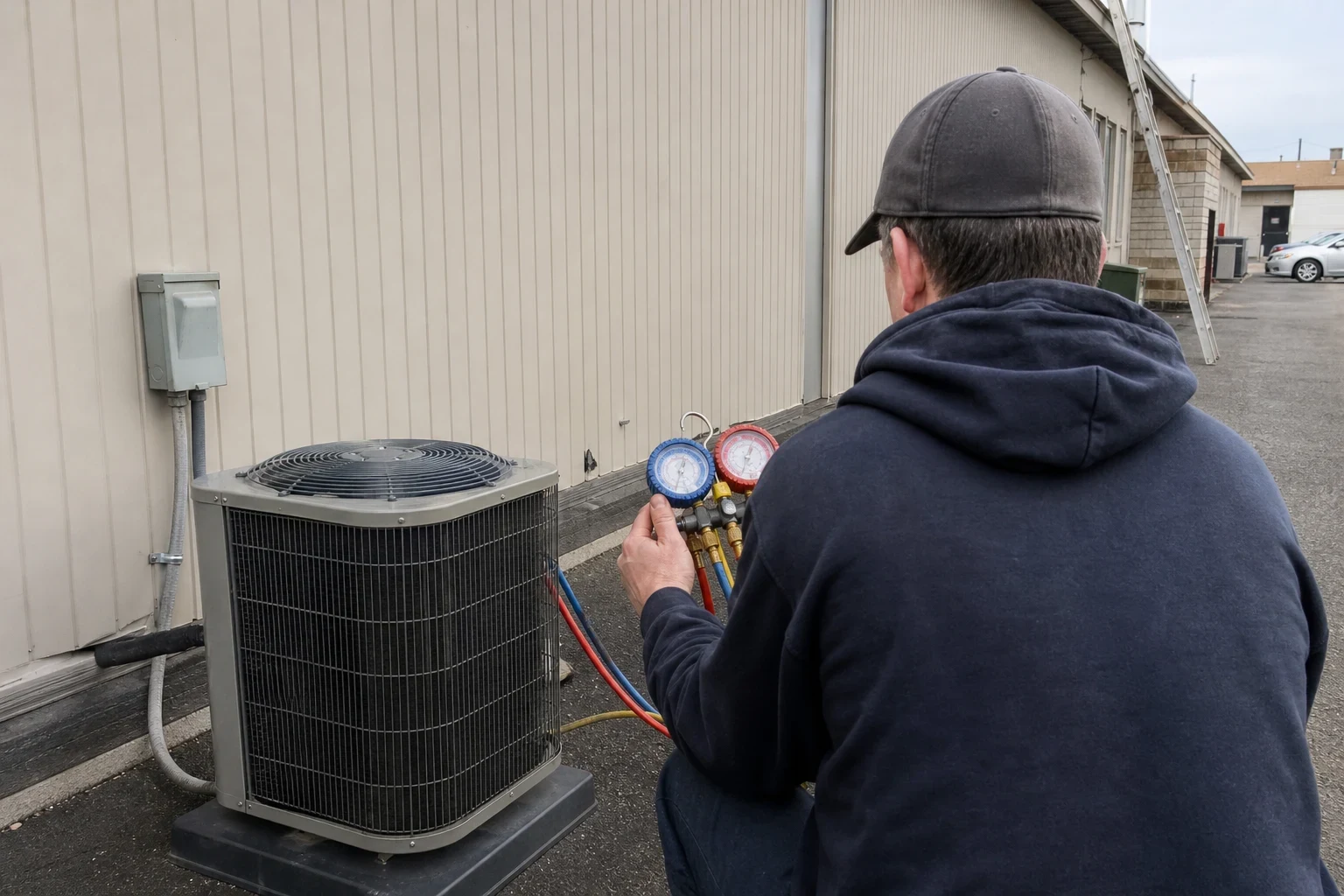
We test the equipment, take photos of anything worn or failing, and explain the findings in plain language. If you choose the repair, the diagnostic fee is credited toward it.
- 3
A written quote
You receive a written quote before any work begins, with repair and replacement options laid out side by side when both make sense.
- 4
Clean, careful work
We protect floors and merchandise, keep walkways clear, and clean up when we finish. Before leaving, we run the system and walk you through what was done.
Commercial HVAC Questions
What size of business do you work with?
We focus on small commercial buildings: offices, retail spaces, workshops, small warehouses and similar spaces. If your building has large central plant equipment, we will tell you honestly whether it is a good fit for us.
Can you work outside our business hours?
Yes. Many owners prefer early morning or after-close visits so customers and staff are not disturbed. We will plan the visit around your schedule when we talk by phone.
Do you handle ductwork in commercial buildings?
No. We service and replace the heating and cooling equipment, thermostats and ductless systems. If we find a duct problem, we will show you what we saw so you can bring in a duct contractor.
Should we repair our rooftop unit or replace it?
It depends on the age of the unit, the condition of the heat exchanger and compressor, and how often it has needed repairs. We lay out both options with their running costs so you can decide based on facts rather than pressure.
What happens if the heat goes out on a winter night?
We offer 24/7 emergency HVAC repair. In a cold snap, a building without heat risks frozen pipes, so call as soon as you notice, and there is no extra charge for after-hours service.
Keep Your Workspace Comfortable
Tell us what your building's system is doing and we will explain your options in plain terms. Quotes are free, and every job starts with a written quote you can review first.