ServicesDuctless Mini-Splits
Ductless Mini-Split Systems in Newman Lake
A mini-split brings heating and cooling to one room or several, with no ducts needed. We work out with you where each indoor head belongs and what size it should be, and we explain what every option means for your home before you agree to anything.
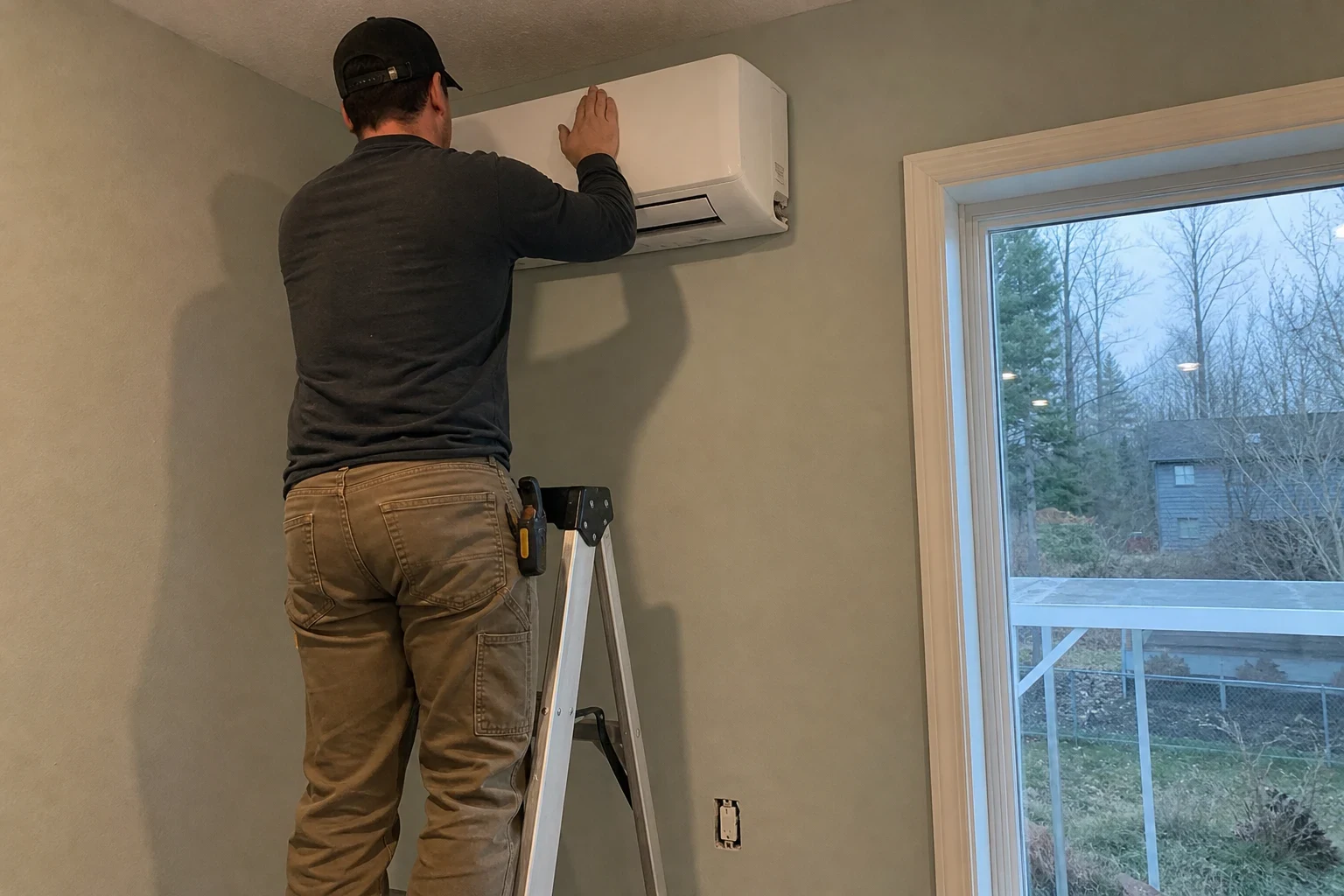
How a ductless mini-split works
A mini-split is a heat pump split into two pieces, one outside and one inside. The compressor sits outdoors on a ground pad or a bracket fixed to the siding, and one or more slim indoor heads mount high on a wall or fit into the ceiling. A hole about three inches across carries the copper refrigerant lines, a power cable and a small drain tube between them.
Every indoor head has its own thermostat, so you can keep the bedroom cooler than the living room. That suits additions, finished garages, bonus rooms above the garage, older homes heated with baseboards, and rooms your current system never really reaches.
They do not suit every home. When your house already has a forced-air system in good condition, our Heat Pumps page explains options that use it and may cost less. We will tell you which makes sense.
What your mini-split installation covers
- Sizing for each room
- We measure every room and take note of its windows, insulation and the direction it faces. An oversized head switches on and off constantly and leaves the air damp. An undersized one runs at full speed and still can't keep up on the coldest nights.
- Placement you sign off on
- We mark each indoor head's location and show you before drilling. We choose a spot that sends air across the room, stays clear of curtains and furniture, and keeps the line run short.
- An outdoor unit built for cold
- We suggest outdoor units rated to keep heating far below freezing, which counts in a Newman Lake winter. The unit goes on a raised stand or bracket so it stays above drifting snow and defrost water can drain.
- Neat line routing
- On the outside, the copper lines run inside a paintable cover fixed tight to the siding rather than left dangling. On the inside, we seal the opening and the head covers it, so the wall looks clean.
- Leak test, evacuation and startup
- Before any refrigerant goes in, we pressurize the copper with nitrogen and watch the gauges for a drop that would signal a leak. Then a vacuum pump pulls out air and moisture until the reading stays put, and we make sure the charge matches your line length. We run each head in heating and cooling and walk you through the remote.
- Help with rebates and tax credits
- Because a mini-split is a type of heat pump, it may be eligible for Avista rebates and federal tax credits. We help you assemble those claims and tell you which receipts and model numbers to keep.
Signs a mini-split may be right for your home
One room is always off
A bedroom over the garage or a sunroom that runs hot in July and cold in January usually needs its own source of heat and cooling rather than a bigger central system.
You heat with baseboards or a wood stove
Many homes have no ducts at all. A mini-split adds efficient heat and real air conditioning without opening walls and ceilings.
You are finishing a space
A new addition, shop or basement suite rarely ties neatly into existing equipment. A single-zone unit handles it on its own.
Window units every summer
If you lift heavy window units in and out each year, a wall-mounted head is quieter, seals the window and also heats in winter.
Different people, different comfort
When one person wants it warm and another wants it cool, separate zones end the thermostat debate.
What moves the cost of a mini-split
Two homes can need very different systems, so we price each job from what we see on the walk-through. Your written quote breaks out each part so you can see where the money goes and adjust the plan if you want.
Number of zones
One head for one room is the simplest job. Each added zone means another head, another line run and often a larger outdoor unit.
Equipment type and rating
Cold-climate models and higher efficiency ratings cost more up front and often use less power over the years. Ceiling cassettes and floor consoles also price differently from wall-mounted heads.
Line length and wall access
Long runs, second-story heads and routing around windows or decks add copper, covers and labor time.
Electrical work
Every system needs a dedicated circuit and a disconnect. If your panel is full or dated, that changes the scope.
Utility and tax incentives
Whatever incentives your equipment qualifies for can bring down what you pay in the end. We note on the quote which models are likely to be eligible.
Steps in a mini-split project
- 1
Walk-through and free estimate
We check the rooms, the outside wall and your electrical panel. Installation and replacement estimates are free, and we compare single-zone and multi-zone choices for you side by side.
- 2
Your quote in writing
Before work starts, you receive a written quote showing the equipment, how many heads, the line lengths and any electrical work. Nothing is added on install day unless you agree.
- 3
Install day
We put down drop cloths, hang the heads, mount the outdoor unit, drill and seal the wall openings, and run the lines and drain. A single-zone job usually wraps up in one day; bigger systems can take two.
- 4
First run and walk-through
We test every zone, clear away drill dust and boxes, and show you how to rinse the filters. We also explain what to keep clear around the outdoor unit when snow comes.
Questions people ask about mini-splits
Can a mini-split keep the house warm through a hard cold snap?
Cold-climate models keep putting out heat well below freezing, though they produce less as temperatures fall. Many households keep a furnace, baseboards or a stove for backup in the worst cold. We size the system with that in mind and tell you honestly what to expect.
How many indoor heads will I need?
Generally one per room or open area you want to set separately. Bedrooms kept closed often need a head each. We go through the rooms with you and explain the trade between fewer heads and more even temperatures.
How loud are the indoor heads?
On low, a wall head is quiet, often quieter than a refrigerator. It runs louder on high while recovering from a big temperature swing, then quiets back down.
What upkeep does a mini-split need?
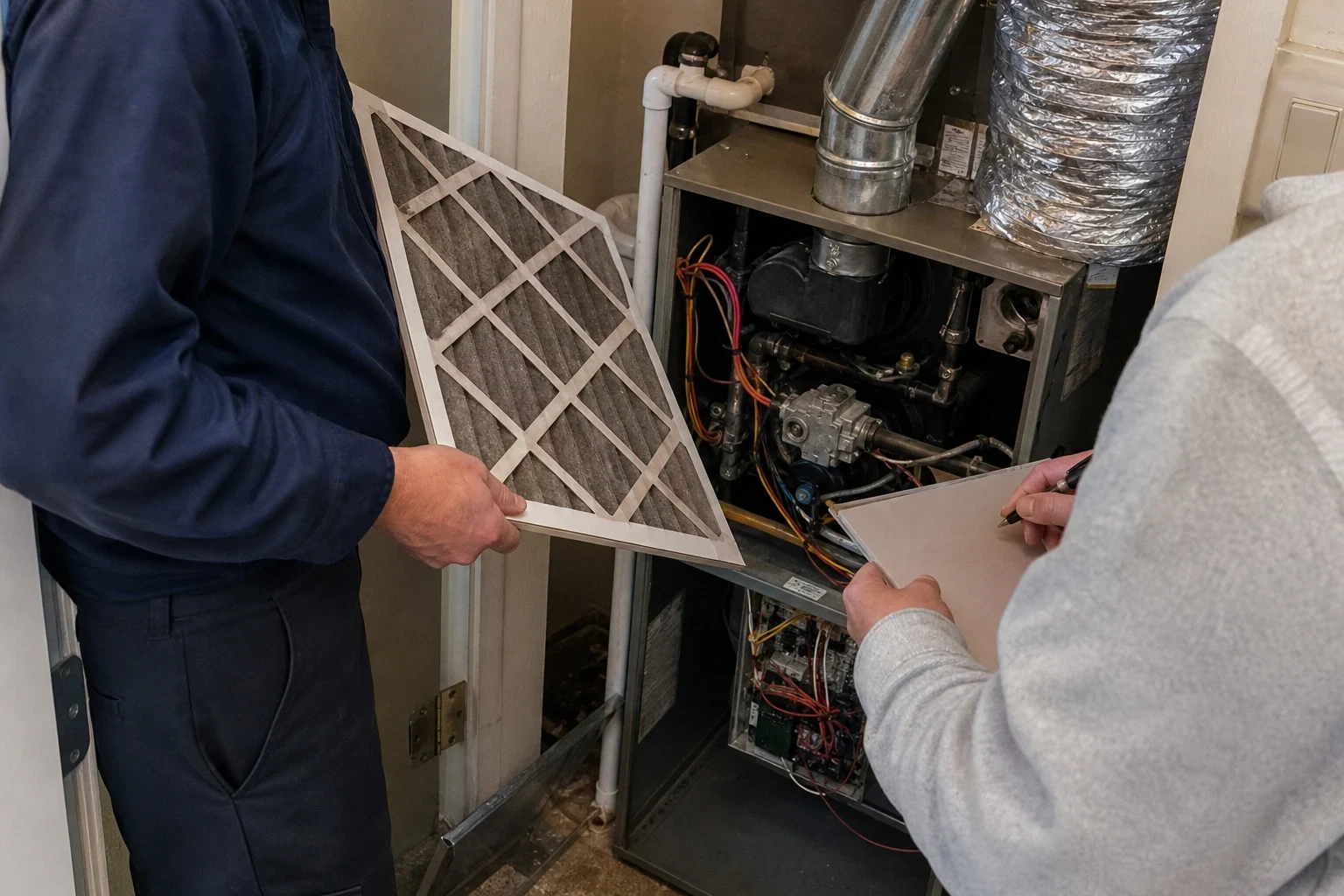
Rinse the washable filters every one to two months in heavy-use seasons. Having a technician clean the coils and drain once a year keeps it efficient, and our Maintenance Plans include that service.
What size hole does the install need?
Roughly three inches per head. We seal it on both sides, and the indoor head normally hides it entirely.
Find out what a mini-split would look like in your home
Tell us which rooms bother you and how you heat now. We will walk you through the options and put a written quote in your hands before anything is installed.