ServicesHeat Pumps
Heat Pumps in Newman Lake
One heat pump both heats and cools your home by moving heat rather than burning fuel to produce it. We explain how each choice copes with real winter cold, size it for your house and put the quote in writing before work starts.
What a Heat Pump Does, in Plain Terms
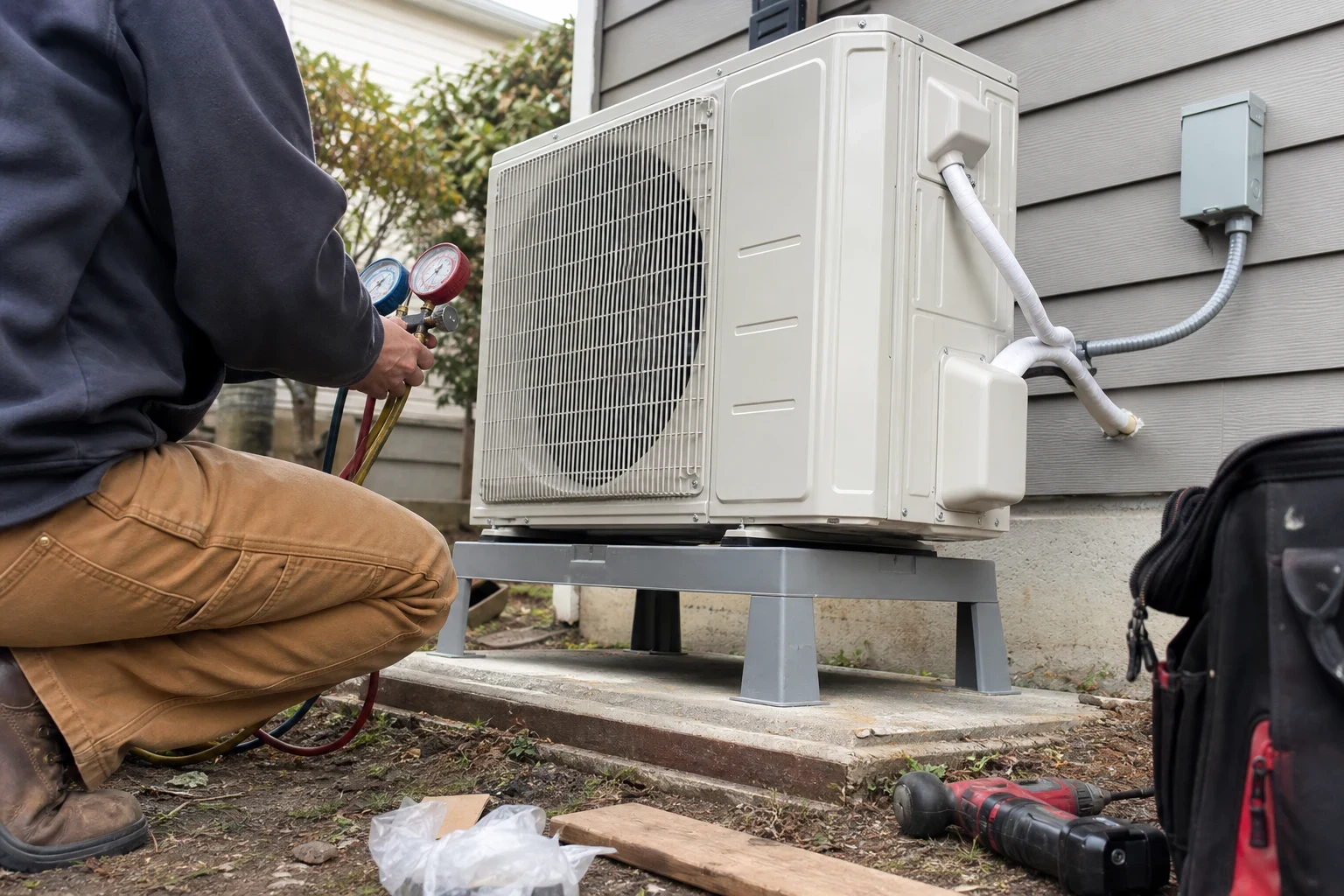
In summer a heat pump works like an air conditioner, pulling heat out of your home and releasing it outside. In winter it runs in reverse, drawing heat from the outdoor air, even well below freezing, and bringing it inside. Because it moves heat rather than creating it, it uses far less energy than electric baseboard or an electric furnace.
The question most people ask is whether it can keep up in January. Modern cold-climate models keep producing heat at temperatures that would have stalled older units, and we pair them with backup heat for the coldest nights. That backup can be electric heat strips or your existing gas furnace, an arrangement called dual fuel. We walk you through which setup suits your home and why.
If your house has no ducts, a heat pump can still work. Our Ductless Mini-Splits page covers that option in detail.
What Your Heat Pump Installation Includes
- A room-by-room load calculation
- We measure your home and account for windows, insulation and orientation before choosing a size. An oversized unit cycles on and off and wears faster; an undersized one leans on backup heat all winter.
- A clear choice of equipment
- We lay out two or three options side by side and explain what the efficiency ratings mean for your bills. You choose with the trade-offs in front of you, not a sales pitch.
- A raised outdoor pad
- The outdoor unit sits on a stand or bracket that keeps it above drifting snow, so it can breathe and drain ice during defrost cycles.
- Backup heat set up correctly
- Whether you keep your furnace or add heat strips, we set the thermostat so backup heat only steps in when it is actually needed.
- Support with incentives
- Before you settle on a model, we point out which ones qualify for Avista rebates and federal tax credits. Once the system is in, we help you gather the documents each program asks for so your claims go in complete.
- Startup, testing and a walkthrough
- We check refrigerant charge, airflow and defrost operation, then show you how the thermostat and filter work before we leave.
Signs a Heat Pump Is Worth Considering
Your electric heat bills climb every winter
Baseboard heaters and electric furnaces turn every watt into one watt of heat. A heat pump typically delivers two to three times that from the same electricity.
Your AC or furnace is near the end
If one system is failing, replacing both functions with a single heat pump can make more sense than two separate purchases.
Some rooms never feel right
Variable-speed heat pumps run longer at lower output, which evens out temperatures between floors.
You want cooling but have never had it
Hotter summers make air conditioning more appealing. A heat pump adds cooling while improving how you heat.
Your current heat pump struggles in cold snaps
Older units lose output quickly as temperatures drop. A cold-climate model, or better backup settings, often fixes the problem.
Why Heat Pump Prices Differ
Two houses of similar size can get different quotes, since the work depends on the equipment and wiring already there. The written quote lists every piece so you can see the cost of each. Rebates and tax credits may cut the final number, and we include them when we go over the options with you.
Capacity and efficiency rating
Bigger, more efficient units cost more to buy and less to operate. We point out where paying more comes back to you and where it doesn't.
Performance in deep cold
Models designed to keep their output on the coldest days are priced above standard ones. Through a hard winter they usually lean less on backup heat.
Your electrical panel
An older panel may need upgrading or an added circuit to handle the heat pump and any backup heat strips.
How backup heat is supplied
Keeping a sound gas furnace for a dual fuel system calls for different equipment than adding electric heat strips.
Where the outdoor unit goes
Long refrigerant lines, wall-mounted brackets or hard-to-reach spots take more labor.
From First Visit to Handoff
- 1
A free look at your home
Estimates on new installations and replacements cost nothing. We look over your current equipment, how much your electrical panel can carry and where the outdoor unit could go, then go through what we found with you.
- 2
The quote on paper
The written quote lists equipment, labor, any electrical work and the rebates you likely qualify for. No work begins without your approval.
- 3
The day of the install
We cover the floors along our route, place the outdoor unit and indoor coil, run the refrigerant lines and wire everything up. Most households are settled again by evening.
- 4
Checks and handoff
We test heating and cooling, make sure defrost works, clean up, then show you the controls and the rebate steps still left to do.
Common Heat Pump Questions
Can a heat pump keep us warm through the coldest part of winter?
A cold-climate heat pump sized correctly handles most of the winter heating. When the coldest nights come, backup heat from strips or your furnace takes over on its own. We set the controls so that hand-off happens at the right temperature for your house.
Can my gas furnace stay?
In many homes, yes. With dual fuel, the heat pump covers mild and moderate days and the furnace takes the deep cold. A furnace in good shape can stay, letting you use less energy without replacing it.
What is the steam coming off the outdoor unit in winter?
It is defrosting. In cold, wet weather frost forms on the outdoor coil, and the system reverses for a short time to clear it. Steam and dripping are expected, and that is part of why we set the unit up off the ground.
How do Avista rebates and federal tax credits work?
Whether you qualify depends on the model and its efficiency ratings, and program rules change now and then. We check which equipment qualifies before you choose. Once the system runs, we help with the Avista filing and gather the papers you need for the federal credit when you do your taxes.
How do I look after a heat pump?
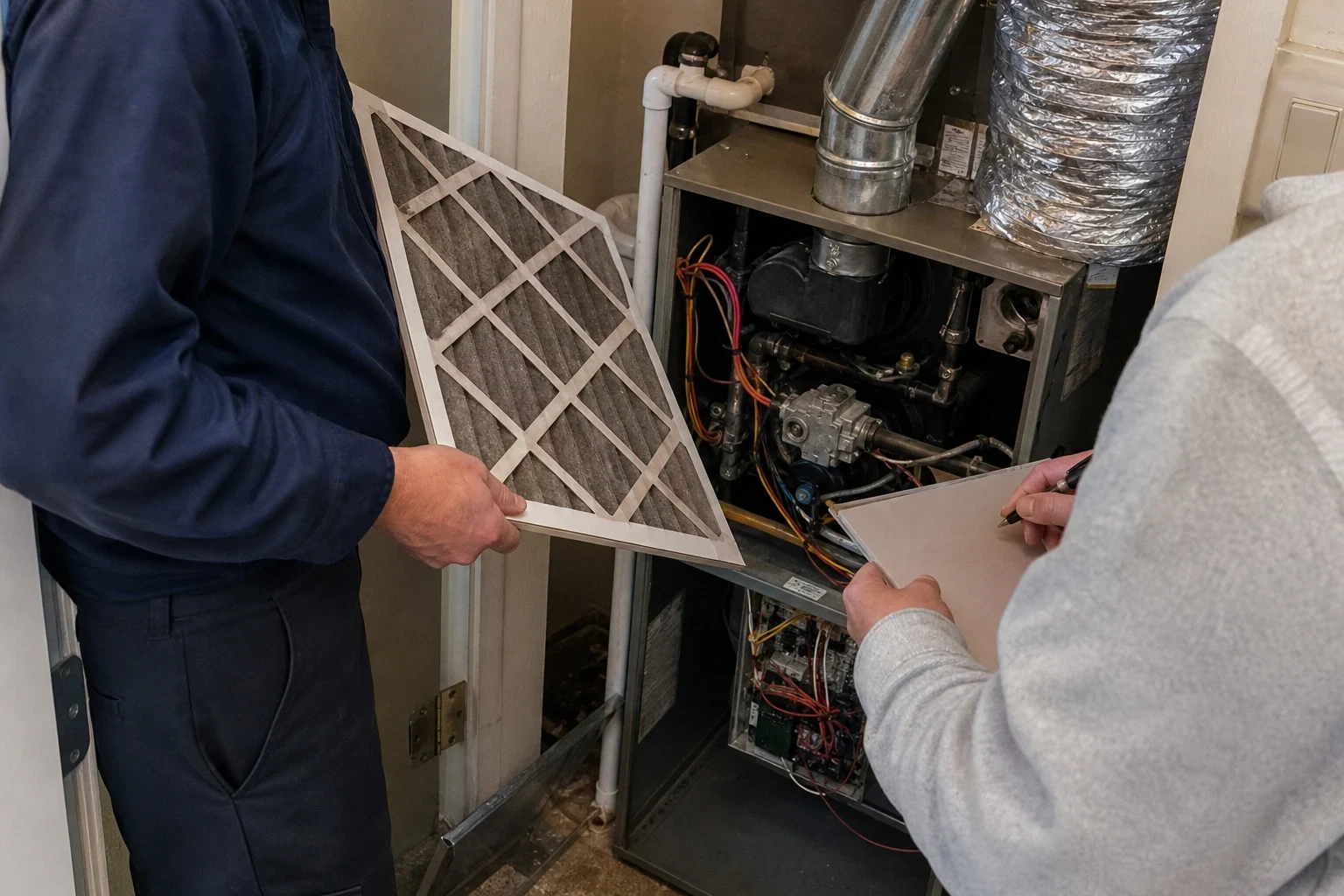
Clean or replace the filter on a regular schedule, clear snow and leaves away from the outdoor unit and book service once a year. It works in summer and winter, so the yearly check counts for more than it does on a furnace alone. The Maintenance Plans page lays out the choices.
Find Out Which Heat Pump Fits Your Home
We will look at your house, explain your options in plain language and give you a written quote with the rebates included. The estimate costs you nothing.