ServicesEmergency HVAC Repair
Emergency HVAC Repair in Newman Lake
When the furnace quits on a freezing night or the air conditioner stops in the middle of a hot spell, we answer 24/7. A technician finds the cause, tells you in plain words what broke, and gives you a written quote before touching a part.
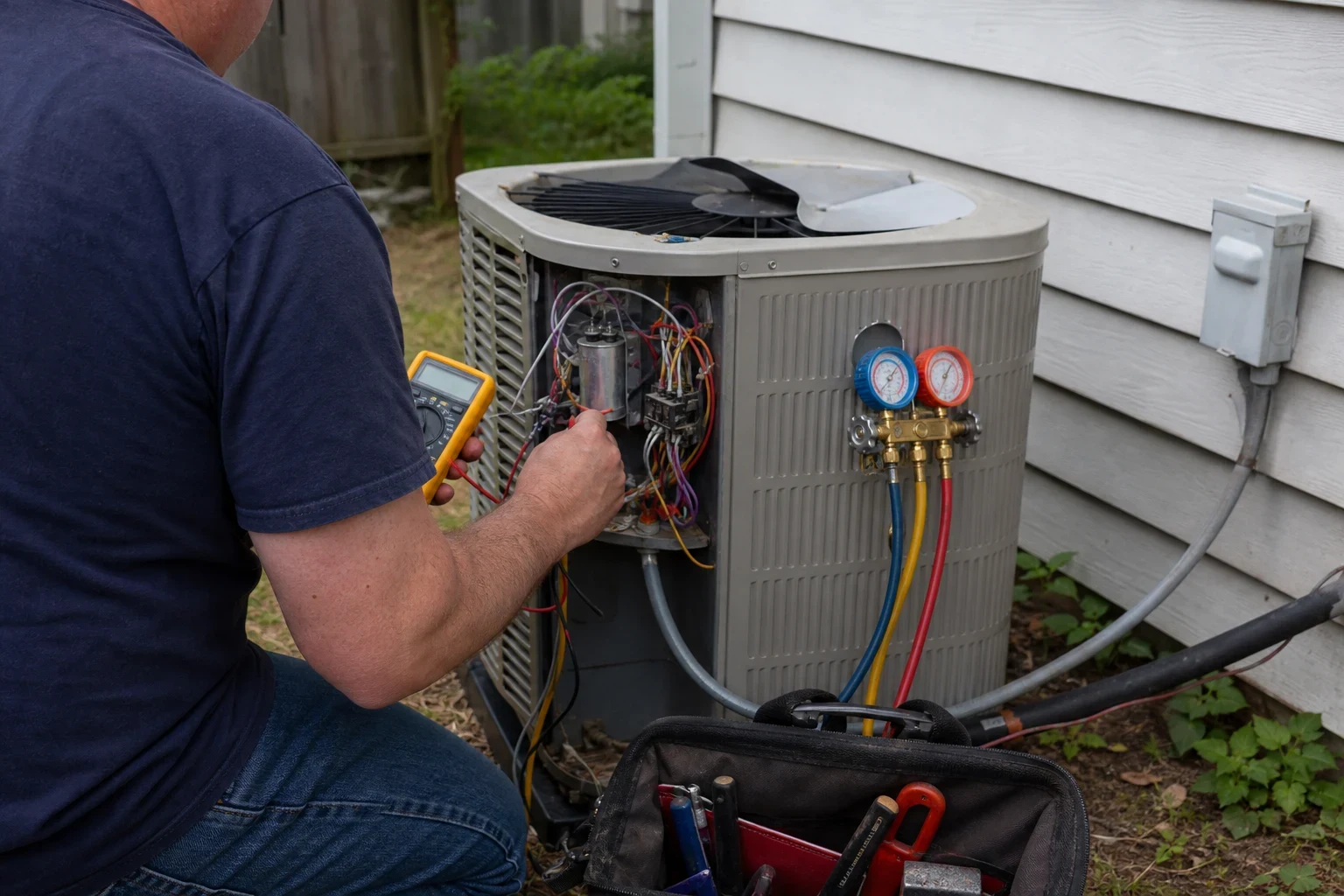
What an Emergency Call Is For
An emergency is any heating or cooling failure that cannot safely wait for a regular appointment. No heat when the house is dropping toward freezing, a gas smell near the furnace, a carbon monoxide alarm, or an air conditioner that died while someone vulnerable is at home. Those calls get a technician dispatched at any hour.
Some problems feel urgent but are not dangerous, like a system that runs but struggles, or a thermostat that seems confused. We will tell you honestly on the phone if it can wait until morning, and what to do in the meantime. Either way, we charge no emergency or after-hours fees, so the clock never changes your bill.
Our aim on every call is that you understand the choice in front of you: what failed, why it failed, and whether a repair or a temporary fix makes sense tonight. For non-urgent problems, our AC Repair and Furnace Repair pages walk through the regular visit.
What Every Emergency Visit Includes
A safety check first
Before anything else we look for gas leaks, scorch marks, cracked heat exchangers and blocked flues. If something is unsafe, we shut it down and explain why.
A full diagnosis
We test the igniter, flame sensor, capacitors, contactor, blower motor and control board rather than guessing. You hear what we found and see the worn part when we can show it.
A written quote before work
Before a single part is replaced, you have the price on paper. Should you approve the repair, what you paid for the diagnosis comes off that total.
Common parts on the truck
We carry the parts that fail most often, such as igniters, capacitors and flame sensors, so many repairs are finished on the first visit.
Care inside your home
Shoe covers, drop cloths near the furnace and a clean work area when we leave. A night call should not leave a mess behind.
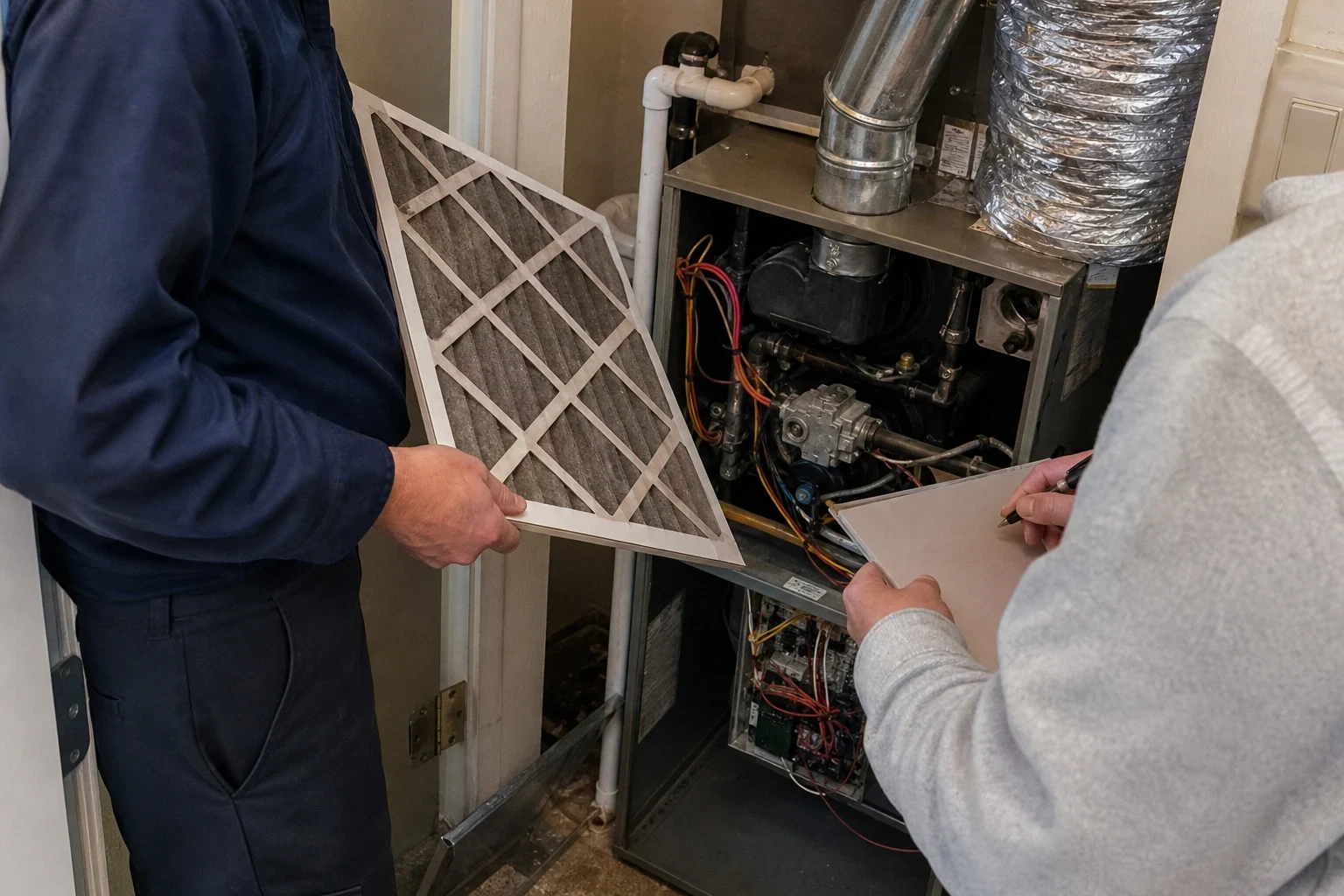
Signs You Need Emergency Help
- Gas smell or CO alarm
- Leave the house first, then call the gas utility or 911. Once it is safe, call us to find and fix the cause.
- No heat in freezing weather
- Our winters in eastern Washington can push indoor temperatures down fast, and pipes can freeze within hours. A furnace that will not light or keeps shutting off is worth a night call.
- Burning or electrical smells
- A hot, metallic or plastic odor from the furnace or outdoor unit usually means a motor is overheating or a wire connection is breaking down. Set the thermostat to off and let the equipment rest until we arrive.
- Loud banging or grinding
- Sudden loud noises usually mean a mechanical part has broken loose. Running it longer can damage the motor or compressor.
- Water pooling near the furnace
- A clogged condensate line or a frozen coil can leak onto floors and into finished basements. Shut the system off and call.
- AC out during a heat wave
- When indoor heat becomes a health concern for children, older adults or pets, we treat a dead air conditioner as urgent.
How an Emergency Call Runs
- 1
You call, we listen
Tell us what happened and what you are seeing. We ask a few questions, give you safety steps, and confirm a technician is on the way.
- 2
Arrival and safety check
The technician protects the floor, checks for gas and electrical hazards, and makes the system safe before diagnosing it.
- 3
Diagnosis in plain words
We find the failed part and explain what it does, why it failed and your options. If a full repair is not possible tonight, we tell you what a safe temporary fix looks like.
- 4
Written quote, then the repair
You approve the written price before work starts. We repair, test the system through a full cycle and confirm your home is heating or cooling again.
- 5
Cleanup and next steps
We tidy the work area and tell you if anything else is worth watching. If your system is near the end of its life, we explain that calmly, with no pressure that night.
What Moves the Cost of an Emergency Repair
The hour you call does not change the price, since we charge no emergency or after-hours fees. What moves the cost is the part that failed and the work it takes to replace it. You see that price in writing before we begin.
- Which part failed
- A flame sensor or capacitor is a small, quick repair. A blower motor, control board or compressor component costs more in parts and time.
- Part availability
- Common parts are on the truck. A model-specific part may need a temporary fix tonight and a return visit once it arrives.
- Where the equipment sits
- Equipment tucked into a cramped crawlspace or attic means slower, more careful work than a unit standing in an open basement or utility room.
- Age and condition of the system
- Older equipment can have more than one worn part. We tell you what is urgent and what can wait, so you decide.
Emergency Repair Questions
- Do you really charge the same at 2 a.m. as at noon?
- Yes. We charge no emergency or after-hours fees. The price depends on the repair, not the time on the clock, and you get it in writing first.
- What should I do while I wait for the technician?
- If you smell gas, leave the house and call the gas utility from outside. For no heat, close curtains, keep interior doors open to share warmth, and drip faucets on outside walls. Turn off the system if it is making grinding noises or smells hot.
- Is the diagnostic fee wasted if I go ahead with the repair?
- No. The diagnostic fee is credited toward the repair. If you choose not to repair, you still leave knowing exactly what failed.
- Will you push me to replace my system that night?
- No. If a repair is reasonable, we repair it. If the system is worn out, we explain why and get it running safely if we can, so you can weigh a furnace installation or heat pump in daylight.
- Can a maintenance plan help avoid these calls?
- Often, yes. Many night failures start as a dirty flame sensor, a weak capacitor or a clogged drain that a tune-up catches early. Our Maintenance Plans page explains what each visit covers.
Heat or Cooling Out Right Now
Call any hour and tell us what is happening. We will talk you through the safe next step and send a technician who explains the fix before starting it.